
Quilt Show
The History of Quilts
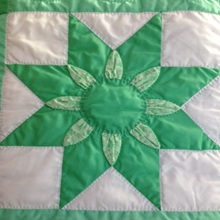 The word quilt comes from the Latin culcita meaning a stuffed sack, but it came into the English language from the French word cuilte. The origins of quilting remain unknown, but historians do know that quilting, piecing, and applique were used for clothing and furnishings in diverse parts of the world in early times.
Quilting is the process of sewing two or more layers of fabric together to make a thicker padded material, usually to create a quilt or quilted garment. Typically quilting is done with three layers: the top fabric or quilt top, batting or insulating material and backing material, but many different styles are adopted.
The Myth of Colonial Quilting is Born.
By about 1840 the textile industry had grown to the point that fabric was readily available to most families. Only then did quilting become a common way for American women to express their creativity. Interestingly it was after quilting became a widespread activity that somehow the idea that quilting was common in colonial times became a romanticized myth. In truth, “Quilts of any kind were rare in New England in the seventeenth and early eighteenth centuries, and it is unlikely that New England women were making quilts in any number until at least the 1750s.
This notion of colonial quilt making was reinforced in the 1920s and 30s. During that time there was a revival of interest in everything colonial including furniture design and an idealized vision of colonial quilting. Manufacturers and magazines took advantage of this fad by promoting as “Colonial Quilts” quilts that were made in the mid nineteenth-century.
History of Colonial Quilting.
Redwork Quilting
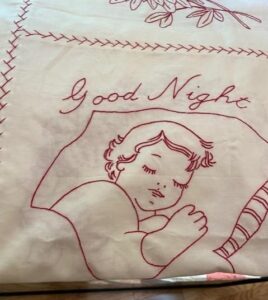 Redwork is an American form of embroidery developed in the 19th century. Turkey Red was the first colorfast dye, and red thread was widely used to embroider all manner of household goods, napkins, tea towels, pillowcases to name a few. At the turn of the century squares of preprinted fabric became available for a penny, often called penny squares, which were ready for stitching. These squares were embroidered then made into quilts. Redwork quilts were often made without batting but lined and tied at the corners of the individual blocks. Redwork designs often depicted children, toys and animals, kitchenware and later state birds and flowers. The stem stitch, satin stitch and French knots were popular and easy to learn. Supplies were inexpensive and affordable for most. Patterns were often given away with magazine subscriptions or printed in magazines and newspapers. Women were encouraged to start a home business transferring these patterns for their friends. In the 1920s more dyes were colorfast leading to more colorful embroidery work, however Redwork remains popular today.
In summary: Redwork is a form of American embroidery, also called art needlework, that developed in the 19th century and was particularly popular between 1855 and 1925. It traditionally uses red thread, chosen because red dyes were the first commercially available colorfast dyes, in the form of Turkey red embroidery floss.
The Quilt Exhibit
Quilts are interesting to many people, including those who do not make quilts. The art of making quilts is slowing down in this fast-paced world we live in, but a quilter is always a quilter.
Some who are not quilters have even been known to make one quilt, some beautiful, some poor material that is now fading and basically falling apart.
During the early 1900’s quilts were known to be made using old women’s dresses, and I have one of those. Unfortunately, the border may not have been made, and one side is longer than the other. But it is well worn, and that was the best they could do. It kept them warm, border or no border.
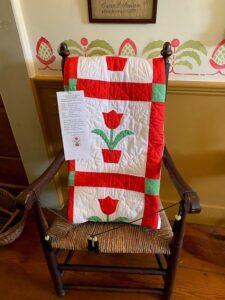
At the first Quilt Exhibit at the Clara Sexton Memorial House, we were excited to see more than 100 visitors on Sunday. The quilts were displayed on chairs, beds, tables, and yes in the newly purchased glass cabinets in the barn. We typed up a summary of whose quilt it was, quilt name, date it was made, and how it is quilted. These were returned to the quilter, and it included the picture of their quilt. Everyone had nice comments. The newly refurbished barn was such a lovely place for quilts and to meet and talk with people. Guided tours will also be available.
We contacted Billerica Access Television, and Jeannette Pothier, creator of the exhibit, gave a tour of all the displays with Michele DeParasis doing the upstairs. The Billerica Access Cable TV captured the quilt exhibit.
Our exhibit did include a few newer quilts, but overall, they were incredibly interesting to all. We look forward to having other exhibits.
Quilts are special and come down from families who are proud to have them on exhibit. Visit a truly beautiful old house and enjoy seeing a part of the past as well as the new. For more information Contact Us.
Quilt Exhibit Tour
Video – BATV – Tara Splingaerd © 2023 – all rights reserved
[metaslider id=”14888″]
Quilt Show – pictures